

In the Santa Clarita Valley, a tankless water heater should be flushed with a descaling solution about once a year, and more often on well water. The flush dissolves the mineral scale that hard water leaves inside the heat exchanger. If you skip it, the unit loses flow and throws error codes, and in the end it fails years before it should.
This guide explains what the flush does, how it is done, and how to tell when yours is due.
Why hard water matters so much for tankless units
A tankless heater warms water as it passes through a narrow heat exchanger. The passages are small, and they get very hot. Calcium and magnesium drop out of hot water fastest, and they settle as scale on exactly those surfaces.
Water here is hard. SCV Water's 2026 Consumer Confidence Report puts its local groundwater at an average hardness of 354 mg/L as calcium carbonate, and its imported surface water at 160 mg/L (SCV Water, 2026). The U.S. Geological Survey classes anything over 180 mg/L as very hard (USGS). Most homes get a blend of the two, so the water coming into most valley homes sits in or near that very hard range.
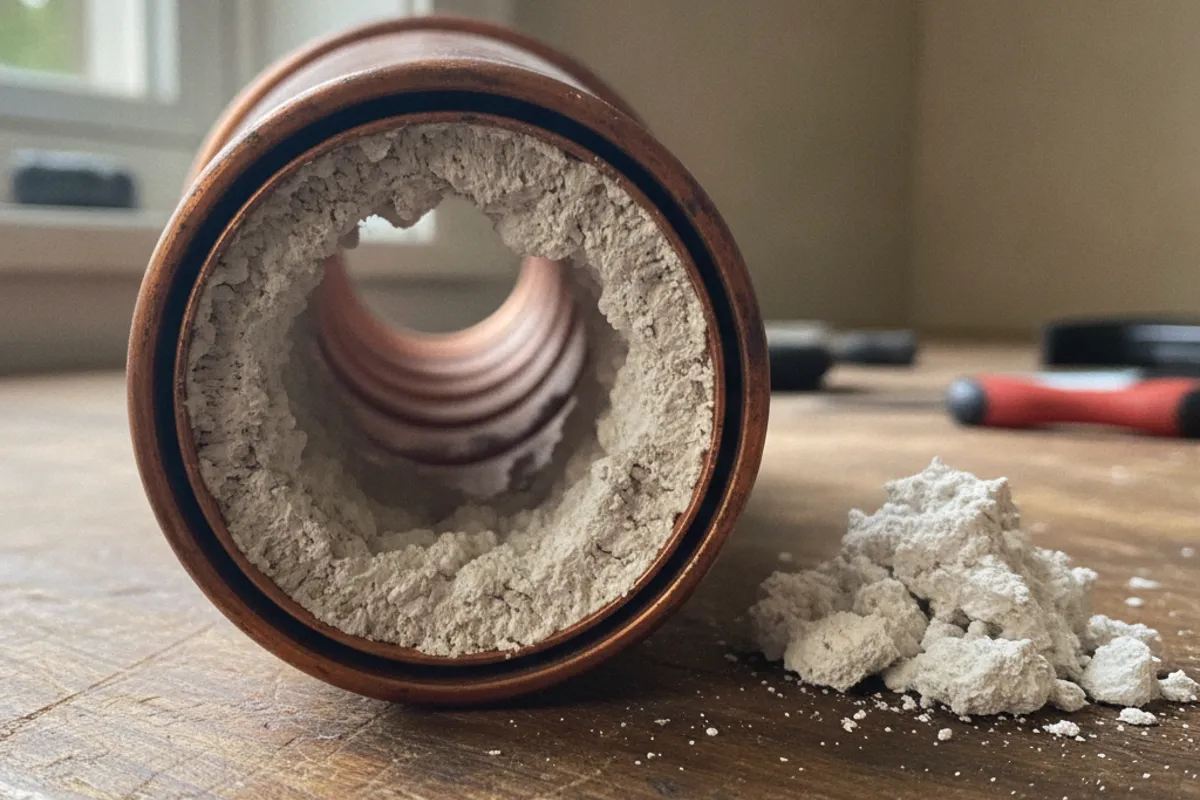
Scale works like insulation. The burner has to work harder to push heat through it, the passages narrow, and the unit's sensors start to read the problem as overheating or low flow.
Signs your tankless heater is overdue for a flush
- Hot water swings between hot and lukewarm in the middle of a shower.
- Flow at hot taps has dropped, while cold flow is still fine.
- The unit shows a maintenance or scale code. Many models display one when they detect the pattern scale causes. Your manual lists what each code means.
- It shuts off when two fixtures run at once, even though it used to cope.
- You hear rumbling or ticking from the unit while it fires.
- It has been more than a year since anyone flushed it, or you do not know whether it has ever been done.
Any one of these on a unit a few years old usually points to scale before anything else.
How a descaling flush works
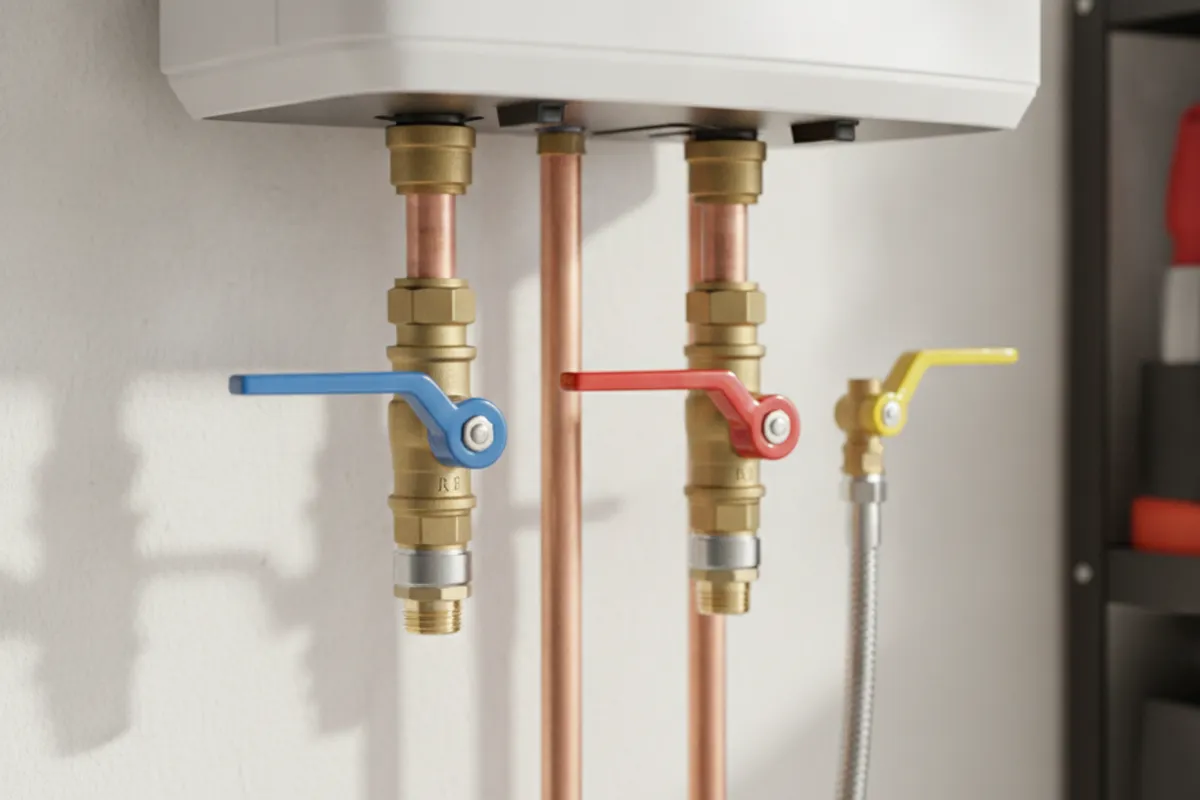
A properly installed tankless unit has a pair of isolation valves on its hot and cold lines, each with a small service port. Those ports are what make a flush possible without cutting any pipe.
- Power and gas off. The unit is switched off at the power supply and the gas valve is closed.
- Isolate the unit. The hot and cold isolation valves are closed, so the heater is cut off from the house plumbing.
- Connect the pump. Hoses go from the service ports to a small circulating pump sitting in a bucket of descaling solution.
- Circulate. The solution is pumped through the heat exchanger and back into the bucket, dissolving the scale as it goes. The manufacturer's manual gives the solution to use and how long to run it.
- Rinse and clean the filter. Fresh water is flushed through to clear the solution, and the inlet water filter screen is taken out and cleaned.
- Restore and test. Valves are reopened, air is bled from the lines, gas and power come back on, and the temperature is checked at a tap.
Handy homeowners do flush their own units, and the valve kit exists for that reason. The steps to be careful with are the gas shutoff and restart, and getting every valve back in the right position. Water left in the wrong path can flood the garage floor. If your unit has no isolation valves, add them before attempting a flush, and that part is a job for a plumber.
How often to flush in the Santa Clarita Valley
- City water (most of Valencia, Saugus, Newhall, Canyon Country, Stevenson Ranch): once a year.
- Private wells (common in Acton and parts of Castaic): often every six months, depending on the well's mineral content.
- Softened water: a softener slows scale a great deal. An annual check is still worthwhile, but the flush may find very little.
If the unit is still under warranty, read the warranty terms to see whether they cover scale damage and what maintenance they ask for. It is worth keeping a note of each flush.
Protecting the unit between flushes
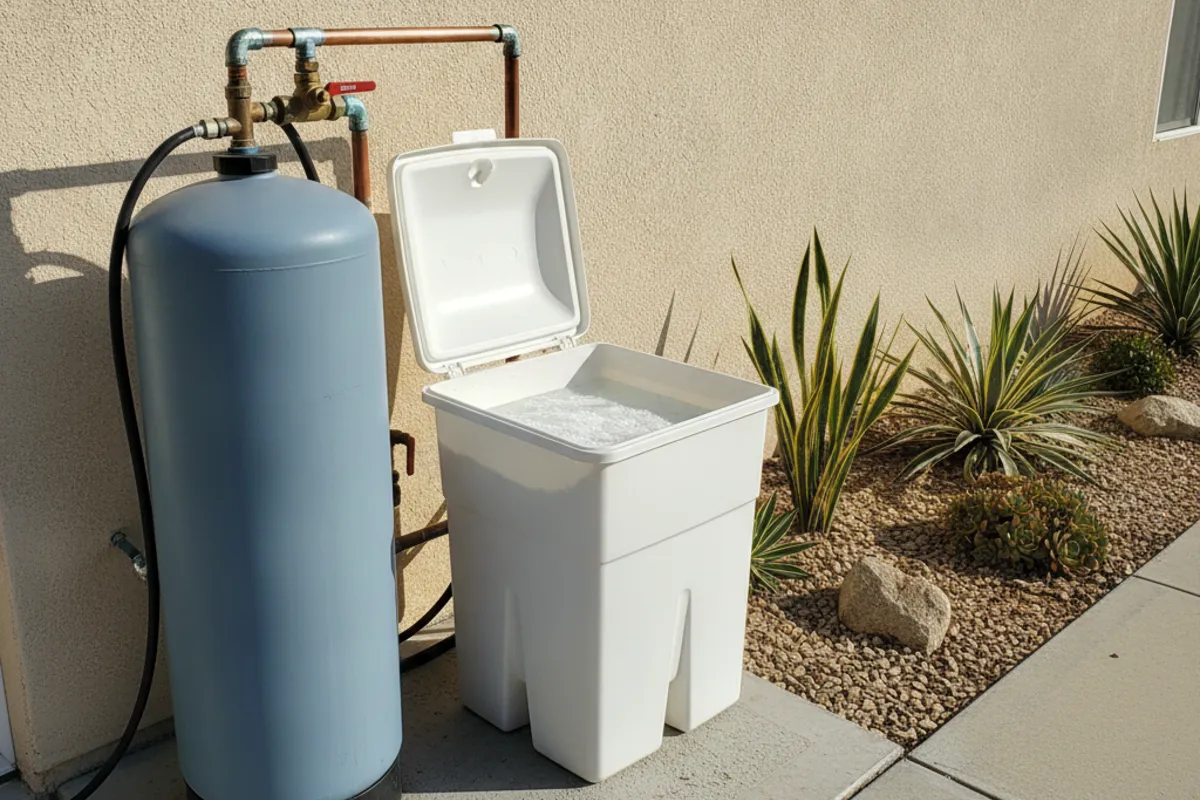
Flushing removes scale that has already formed. Treating the water stops most of it forming in the first place. A whole-house softener, or a scale-reduction system in front of the heater, cuts the rate of buildup and protects fixtures and other appliances too. Our hard water guide covers the options in more detail. If you are weighing a softener, our water filtration and softener service sizes one to your water and your household.
Getting it done
BluePoint Plumbing installs and services tankless heaters across the valley. We fit isolation valves where they are missing and flush and check units that have started to struggle. If your hot water has turned unreliable, or you cannot remember the last flush, see our tankless water heater service in Santa Clarita or get in touch and we will take a look.